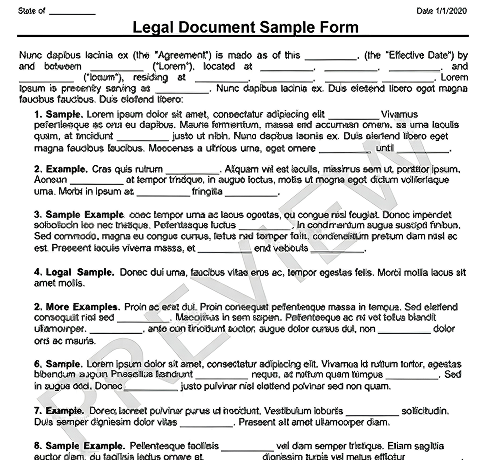


What Is a Loan Forbearance Agreement?A lender may use a Loan Forbearance Agreement to avoid foreclosing on a property. When a borrower can't meet loan requirements, they risk getting hit with a foreclosure notice and having the property taken away. However, the lender might agree to reduce the loan payments or even postpone them. In that case, the two parties would enter into a Loan Forbearance Agreement. The agreement provides relief for the mortgagor and takes foreclosure temporarily off the table. A Loan Forbearance Agreement is temporary. The deferral period is most commonly three to six months, though the mortgagee could always agree to extend that period. After that, the mortgagor will have to continue making payments on the loan. To be eligible for a Loan Forbearance Agreement, the mortgagor may have to prove they can resume making regular payments in due time. Other Names for Loan Forbearance AgreementDepending on your state, a Loan Forbearance Agreement may also be known as: Forbearance Agreement Mortgage Forbearance Agreement Who Needs a Loan Forbearance Agreement?
A mortgagor who's unable to meet mortgage payments may ask the mortgagee for a Loan Forbearance Agreement. For example, an individual on extended sick leave may need such assistance.
Why Use 360 Legal Forms for Your Loan Forbearance Agreement?
Customized for you, by you
Create your own documents by answering our easy-to-understand questionnaires to get exactly what you need out of your Loan Forbearance Agreement.
Specific to Your Jurisdiction
Laws vary by location. Each document on 360 Legal Forms is customized for your state.
Fast and easy
All you have to do is fill out a simple questionnaire, print, and sign. No printer? No worries. You and other parties can even sign online.
How to Create a Loan Forbearance Agreement With 360 Legal Forms
A Loan Forbearance Agreement needs to be created with extreme attention to detail. You cannot afford to make any mistake that could jeopardize your home.
Let 360 Legal Forms help with our extensive library of attorney-vetted legal forms. The process is fast and easy. All you have to do is fill out our easy-to-understand questionnaire. Once complete, simply download your form as a PDF or Word document from your secure online account.
What Information Will I Need to Create My Loan Forbearance Agreement?
To create your document, please provide:
- Mortgagor details: The legal name and contact information of the mortgagor
- Mortgagee details: The legal name and contact information of the mortgagee
- Existing loan documentation: The original loan agreement
- Forbearance period: The period during which the Loan Forbearance Agreement is valid
- Effective date: The date on which the Loan Forbearance Agreement starts
- Signatures: The mortgagor and the mortgagee must both sign the agreement
- Repayment terms: How the missed payments will be handled
Loan Forbearance Agreement Terms
- Mortgagor: The person who took out a mortgage loan
- Mortgagee: The holder of a mortgage loan
- Forbearance: A temporary refrain from enforcing the terms of the loan
- Foreclosure: The act of a lender taking ownership of a mortgaged property if the borrower fails to satisfy the terms
- Special considerations: Circumstances under which borrowers are eligible for a Loan Forbearance Agreement
Loan Forbearance Agreement Signing Requirements
Both the borrower and the lender must sign the document. Most states require a witness signature but not notarization.
Before creating the document, check the laws of the state to confirm the signing requirements.
What to Do With Your Loan Forbearance Agreement
After generating your Loan Forbearance Agreement on 360 Legal Forms, print a copy and get both the lender and the borrower to sign it. Supply each party with a copy of the Loan Forbearance Agreement for safe-keeping with the original loan agreement. Depending on the jurisdiction, it might have to be filed with a governing body, though this is usually the lender's responsibility.