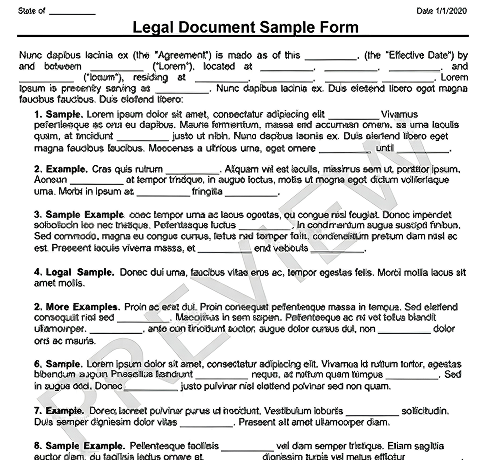


A property owner can allow other parties to use the property under a set of rules specified in the License Agreement. License Agreements are mostly used for intellectual property like copyrights, trademarks, and patents.
What Is a License Agreement?
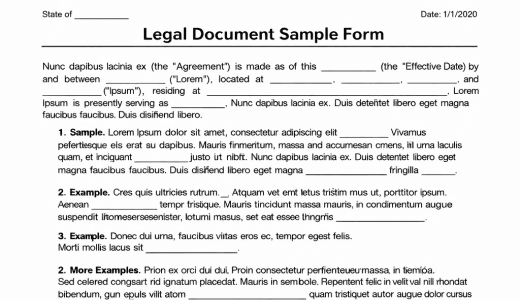
A License Agreement is a contract between two parties (the licensor and the licensee). The licensor or owner of the property grants the rights to the licensee under certain conditions.
Other Names for a License Agreement
Depending on your state, a License Agreement may also be known as:
- License Contract
- Agreement on Licensing
- Licensing Arrangement
- Licensing Deal
- License to Use
Who Needs a License Agreement
To use any licensed material legally, an individual or organization must first obtain a Licence Agreement. The owner of the content gets to define the limits for using the license and any compensation required.
Why Use 360 Legal Forms for Your License Agreement
Customized for you, by you
Create your own documents by answering our easy-to-understand questionnaires to get exactly what you need out of your License Agreement.
Specific to Your Jurisdiction
Laws vary by location. Each document on 360 Legal Forms is customized for your state.
Fast and easy
All you have to do is fill out a simple questionnaire, print, and sign. No printer? No worries. You and other parties can even sign online.
How to Create a License Agreement with 360 Legal Forms
Creating a Licence Agreement contract can require a lot of research and time, and even then, there is a chance you will miss certain things. You can save yourself the time and potential losses by using 360 Legal Forms to generate the document.
Let 360 Legal Forms help with our extensive library of attorney-vetted legal forms. The process is fast and easy. All you have to do is fill out our easy-to-understand questionnaire. Once complete, simply download your form as a PDF or Word document from your secure online account.
What Information Will I Need to Create My License Agreement?
To create your document, please provide:
- Licensor details: Full name and address of the licensor. Choose if the licensor is an individual or business.
- Licensee details: Full name and address of the licensee. Choose if the licensee is an individual or company.
- Licensed materials: Define the licensed subject, the type of license, and if the license is exclusive.
- Compensation: Select royalty payments, a one-time licensing fee, or a combination of the two. Define how royalty payments are calculated if selected.
- Termination: Does the license expire and when? Can it be terminated with a written notice before the expiry date?
- Dispute resolution: Arbitration or court as the default method of solving any dispute that may arise. Select the jurisdiction the licensor has standing in. Most intellectual property laws of concern are US federal laws.
License Agreement Terms
- Licensor: A party giving the limited right to its property in exchange for compensation or consideration.
- The licensee: The party awarded the right to use a property under a set of rules.
- One-time licensing fee: Compensation paid after the License Agreement is executed.
- Royalty payments: Defined as the licensor’s entitlement to a percentage of the licensee’s revenue earned from the licensed property.
- Arbitration: A method of dispute resolution outside of the court system.
License Agreement Signing Requirements
The License Agreement has to be signed by the owner of the property (licensor) and the party authorized to use the license (licensor). Notarization is not typically required, though getting the signatures witnessed and notarized can potentially strengthen the agreement.
What to Do with Your License Agreement
After reviewing the document and signing it, the two parties should keep a copy of the final document. The licensee must pay to the licensor any one-time licensing fee due as defined in the contract. If there is a breach of the agreement, dispute resolution would first proceed as defined in the contract by default.