logo
4.9out of 5 based on268 Reviews
Trustpilot

Confidentiality Agreement

A Confidentiality Agreement protects the confidential information disclosed by one party to another.

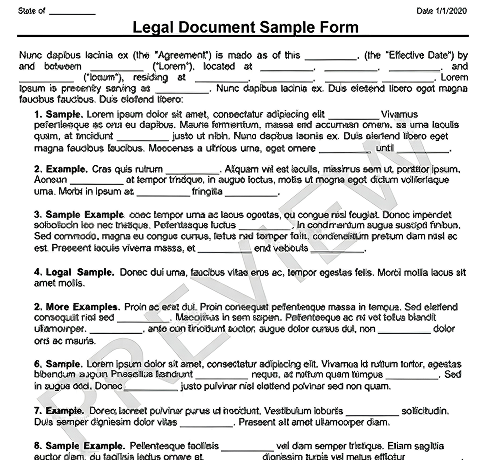
Click the document to preview.

Legal Document Preview

Why Choose Our Forms

We create legal forms online that are reviewed by attorneys, quick to make & secure to use.

Attorney‑drafted & state‑specific
Customizable & downloadable in Word/PDF
Works for landlords, buyers, sellers
Secure, easy to use

The Confidentiality Agreement is relatively standard in the corporate world. Wherever valuable information is involved, this agreement is the norm. Companies may use this agreement to prevent trade secrets or new business ideas from getting out. Most commonly, an employer and an employee enter into such a contract.

The agreement can also be used to bind one or more parties to confidentiality at the beginning of a partnership or new venture.

What Is a Confidentiality Agreement?

There are many types of Confidentiality Agreements. For example, the Non-Disclosure Agreement is a form of Confidentiality Agreement when two businesses enter into a set of negotiations.

Whenever you have to protect valuable information, this contract may be in order.

Other Names for Confidentiality Agreement

Depending on your state, a Confidentiality Agreement may also be known as:

  • Secrecy Agreement
  • Confidentiality Contract
  • Proprietary Information Agreement
  • Confidential Disclosure Agreement
  • Non-Disclosure Agreement

Who Needs a Confidentiality Agreement?

The Confidentiality Agreement has many purposes and the main being to protect confidential and often valuable information that could jeopardize one party if shared. To begin with, employers use the agreement to protect information shared with employees and contractors. In short, a Confidentiality Agreement is a straightforward way to protect critical data of any kind.

Customized for you, by you

Create your own documents by answering our easy-to-understand questionnaires to get exactly what you need out of your Confidentiality Agreement.

Specific to Your Jurisdiction

Laws vary by location. Each document on 360 Legal Forms is customized for your state.

Fast and easy

All you have to do is fill out a simple questionnaire, print, and sign. No printer? No worries. You and other parties can even sign online.

Confidentiality Agreements can be overly broad and difficult to enforce as a result. A template can be handy to make this process quick, easy, and useful.

Let 360 Legal Forms help with our extensive library of attorney-vetted legal forms. The process is fast and easy. All you have to do is fill out our easy-to-understand questionnaire. Once complete, simply download your form as a PDF or Word document from your secure online account.

What Information Will I Need to Create My Confidentiality Agreement?

To create your document, please provide:

  • Party Details: The name, address, and contact information of all parties entering the agreement.
  • Effective Date: The date when the deal is to become effective.
  • Governing State: Name the state's law applying to this agreement.
  • Purpose: Explain the reason and purpose of why you've chosen to create this agreement.
  • Example: For clarity, provide an example of what would be considered confidential information.
  • Additional Clauses: Add any other relevant clauses to the contract.
  • Term: Specify the agreement's duration, especially if it is to continue to apply post-termination of the contract.

Confidentiality Agreement Terms

  • Cease and Desist: A demand to stop using copyrighted materials, usually issued by the rights owner or the legal representative
  • Copyright: The intellectual right to specific work
  • Fiduciary Duty: The quality of one party having a duty of trust in the best interest of another party
  • Patent: A protected right for the exclusive use of one's invention
  • Trademark: A delineating quality identifying a person, entity, or thing
  • Misappropriation: The stealing and disclosing of trade secrets
  • Severability: The quality of a document, such as an agreement or lawmakers' bill, being valid even when some parts or provisions are struck out (valid without the offending parts or provisions)

Confidentiality Agreement Signing Requirements

The Confidentiality Agreement becomes a legally binding document once signed by all parties involved. It is not required by law to have this document notarized. Still, in some instances, it can be a good idea to do so if you anticipate the challenge of signatures one day.

What to Do with Your Confidentiality Agreement

Upon signing, it is customary for all parties to keep a physical copy of the Confidentiality Agreement.
Create now your document:
Know someone who needs this document?
Share it with them!

Frequently Asked Questions

You do not always have to use a written Confidentiality Agreement. In many instances, both parties may settle on an oral agreement. However, having a written contract is common too, and it would possess clear evidence of the agreement and all the provisions. A written contract may reassure both parties and prevent any misunderstandings that might ensue.
Confidentiality Agreements and Non-Disclosure Agreements (NDA) are used interchangeably, although there are subtle differences in practice. The Confidentiality Agreement is used for a higher level of secrecy. NDAs simply specify the information covered, as opposed to Confidentiality Agreements that may require the parties to actively protect the sensitive data against theft, e-database breaches, and more. The NDA is mostly used in startups involving a third party. Third parties can be potential investors, customers, suppliers, and vendors that would be required to protect any disclosed intellectual property, trade secrets, financial information, etc. NDAs are most common in the US. When doing business across borders, foreign companies may recognize either as a Confidential Agreement. Confidentiality Agreement in Employment. Confidentiality Agreements are more commonly used.
A confidentiality agreement can be unilateral, mutual, or multilateral. Unilateral Confidentiality Agreement only require the receiving party to sign the Confidentiality Agreement. Mutual Confidentiality Agreements or Bilateral Confidentiality Agreements are signed by both parties, usually when both are in receipt of business secrets. Multilateral Confidentiality Agreements govern three or more parties, of which at least one is a disclosing party. The use of a Multilateral Confidentiality Agreement eliminates the need for separate Mutual Confidentiality Agreements. The Confidentiality Agreement created through this page is a Unilateral Confidentiality Agreement.  
Including a non-compete covenant with your Confidentiality Agreement is a promise not to compete against the other party. This may be restricted to a particular market and location. This covenant is most commonly used between employers and employees, especially the star employees who might want to strike out on their own in the same industry. While this can be a separate document, you may also include it in the confidentiality agreement.
An injunction is a court order for one party to refrain from a certain act at the threat of contempt of court. As relates to a Confidentiality Agreement, a court injunction would most commonly order one party to not disclose any relevant confidential information they are not supposed to share. The defendant who breaches a Confidentiality Agreement may be ordered to pay monetary damage, but even before or after that, the claimant can petition the court for an injunction to order the defendant to not disclose the information or to refrain from disclosing any further.
The non-solicitation cluase is a covenant to refrain from using confidential information to poach clients or employees from the party that disclosed the information. While it can be a standalone document, the non-solicitation clause is often inserted into other contracts.

Related Document

How to Create a Document

Create professional legal documents quickly and easily—no legal experience required. Our step-by-step process helps individuals and businesses generate accurate, state-compliant documents in minutes.

Step 1

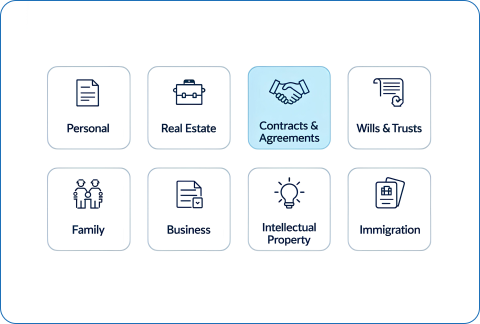
Choose the document to create

Browse clearly organized categories to find the right legal document for your needs.

Step image
Step 2

Answer a few simple questions

Provide basic details through guided questions that shape your document accurately.

Step image
Step 3

Customize, download & sign

Review, edit, and download your completed document, ready to sign and use instantly.

Step image